
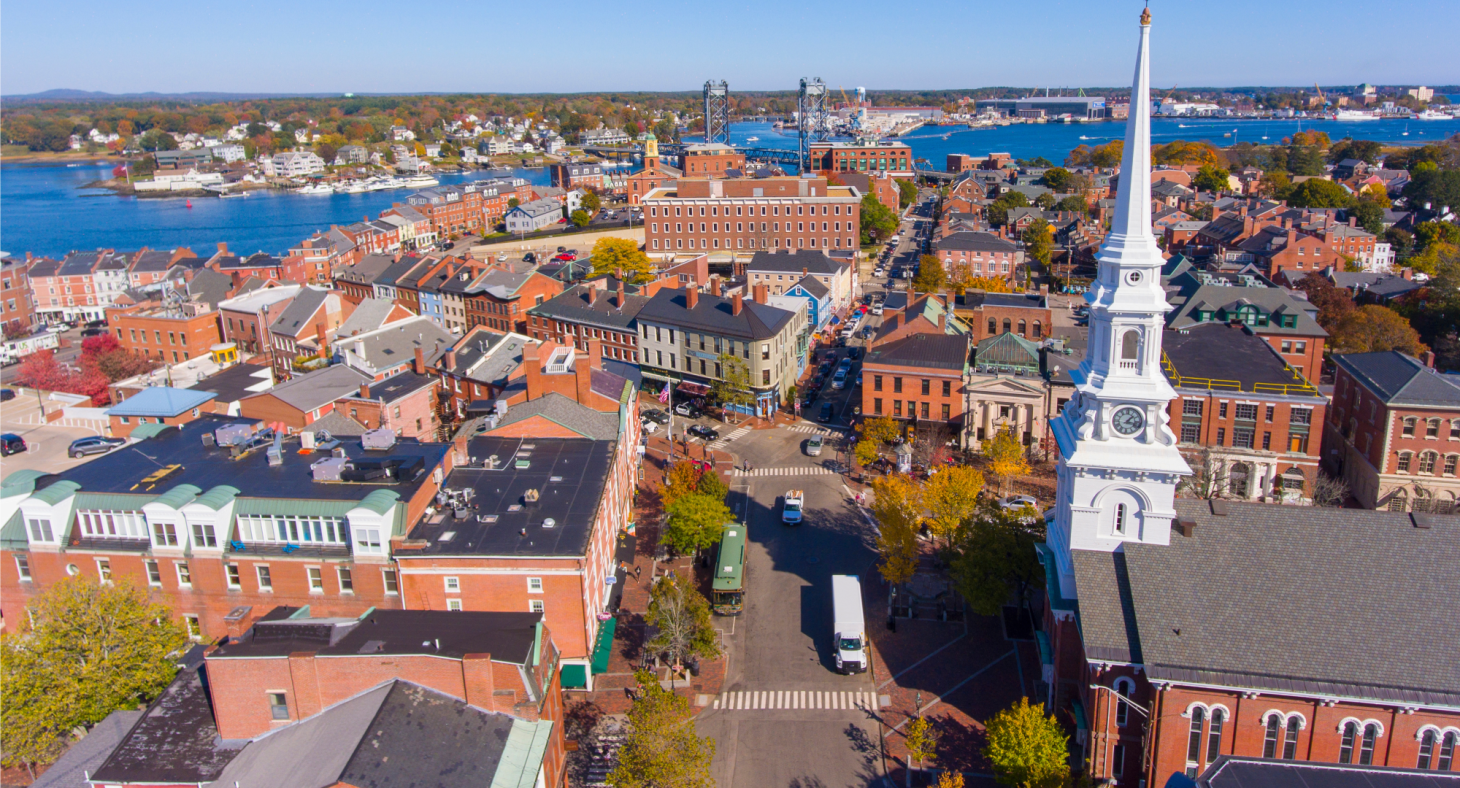
On the latest episode of Ritter on Real Estate, I had the pleasure of speaking with Axel Ragnarsson, founder of Aligned Real Estate Partners, about a topic that doesn’t often get the spotlight: why he believes smaller multifamily properties in the Northeast might just be one of the best-kept secrets in real estate investing.
While most investors have been chasing opportunities in the Sunbelt or Midwest, Axel has quietly built a thriving business in New Hampshire, Rhode Island, and Florida — acquiring and operating more than 550 units and managing over 800 through his property management company. His story offers an unconventional look at what it means to “invest like a pro” by leaning into inefficiency and scaling smart.
From Flipping Houses to Building Cash Flow
Like many of us, Axel’s journey started with flipping houses — inspired by HGTV and the idea of fast profits. But as he told me, he quickly realized something critical: flipping was a job, not an investment.
“I wasn’t a great construction manager,” he said candidly. “And even if I got good at it, flipping had no residual value. The minute I stopped working, the money stopped coming in.”
That realization led him toward multifamily investing — small properties, two to four units at first, using the BRRRR strategy: buy, rehab, rent, refinance, repeat. It was a better fit for his skills in deal sourcing, creative financing, and structuring partnerships — and, most importantly, it created lasting income streams.
Finding a Niche: Small to Mid-Sized Multifamily
Most investors eventually want to “go big” — 100+ units, institutional-grade assets, and economies of scale. Axel took a different route. His sweet spot? Five to 50-unit properties, mostly in New Hampshire.
That size range might sound too small to some investors, but Axel’s strategy flips the narrative. These deals sit in an underexplored pocket of the market — too large for individual mom-and-pop landlords and too small for institutional players.
That creates what Axel calls “inefficiency opportunity.”
“When you’re in a less efficient market,” he said, “pricing mistakes happen more often. Fewer buyers, fewer comps, and fewer data points mean more chances to buy below market value.”
Instead of competing with deep-pocketed investors in Dallas or Tampa, Axel’s team focuses on finding discounted properties directly from sellers — often via cold calling or direct mail — and improving them through solid management and light renovations.
Scaling Through Systems, Not Size
But what about economies of scale? That’s a common pushback when investors hear about scattered-site portfolios.
Axel’s answer is technology. His team has built a property management infrastructure that rivals larger operators through smart automation and AI integration.
Some of the tools he mentioned include:
– Tenant Turner for self-showings, allowing 24/7 access for prospective tenants.
– AppFolio + LeadSimple to automate leasing, follow-ups, and workflows.
– AI chat assistants to handle the most common leasing questions — reducing phone volume and freeing up staff.
– Virtual maintenance call centers and automated progress tracking for contractors.
– AI-powered staging and renderings to pre-market units under construction.
As Axel put it, “We can do a lot behind the scenes with tech to optimize the scattered-site nature of the business. We’re leveraging automation to cut labor costs and speed up leasing — all while giving tenants a better experience.”
It’s proof that you don’t need 300 units under one roof to operate efficiently — you just need a smarter system.
Why New Hampshire Is a Hidden Gem
Let’s talk markets. The Northeast rarely makes headlines for real estate investing, and that’s exactly why Axel likes it.
New Hampshire, specifically, offers unique advantages:
– No state income or sales tax
– Business-friendly environment
– Positive population growth — the only state in the Northeast with that distinction
– Lower cost of living compared to neighboring Massachusetts
While many investors chase hot metros in the South, Axel sees opportunity in underappreciated markets with steady fundamentals and limited competition.
“True outsized returns,” he explained, “come from capitalizing on inefficiency. We’re in a market with fewer transactions, less data, and more mispricing. That gives us room to buy right and create value.”
Leveraging AI to Create the Next Edge
AI is the newest wave transforming property management, and Axel is already ahead of the curve. From AI chatbots that answer tenant questions, to automated rent collection reminders, to visual AI tools that generate renovation mockups — his team is finding real ROI in automation.
The result? Fewer manual tasks, faster leasing, and more time for people to focus on what matters — operations, strategy, and investor relations.
“Conversational AI is finally useful,” Axel told me. “We’re at the point where it’s not fluff — it’s saving us real time and money.”
The Takeaway
Axel’s story is a powerful reminder that there’s no one-size-fits-all path to multifamily success. Whether you’re in the Northeast or the Sunbelt, 20 units or 200, the fundamentals remain the same:
Buy right. Add value. Build systems that scale.
And above all — invest where others aren’t looking.
To hear the full conversation with Axel Ragnarsson, including how he structures deals and raises capital from LPs, check out the latest episode of Ritter on Real Estate wherever you get your podcasts.